WMATA NightPath
Lighting the way home for Washington, D.C.
Transforming the physical DC Metro network into an ambient lighting environment the moment the sun goes down.
If the sunrise-sunset.org API detects civil twilight in Washington D.C., then WMATA NightPath transforms station displays, mobile screens, and street pavements into illuminated safe havens.
Case Study
When the activation comes alive, OUTFRONT shelter frames and lights activate to create warm-light safe havens while commercial ad screens continue running.
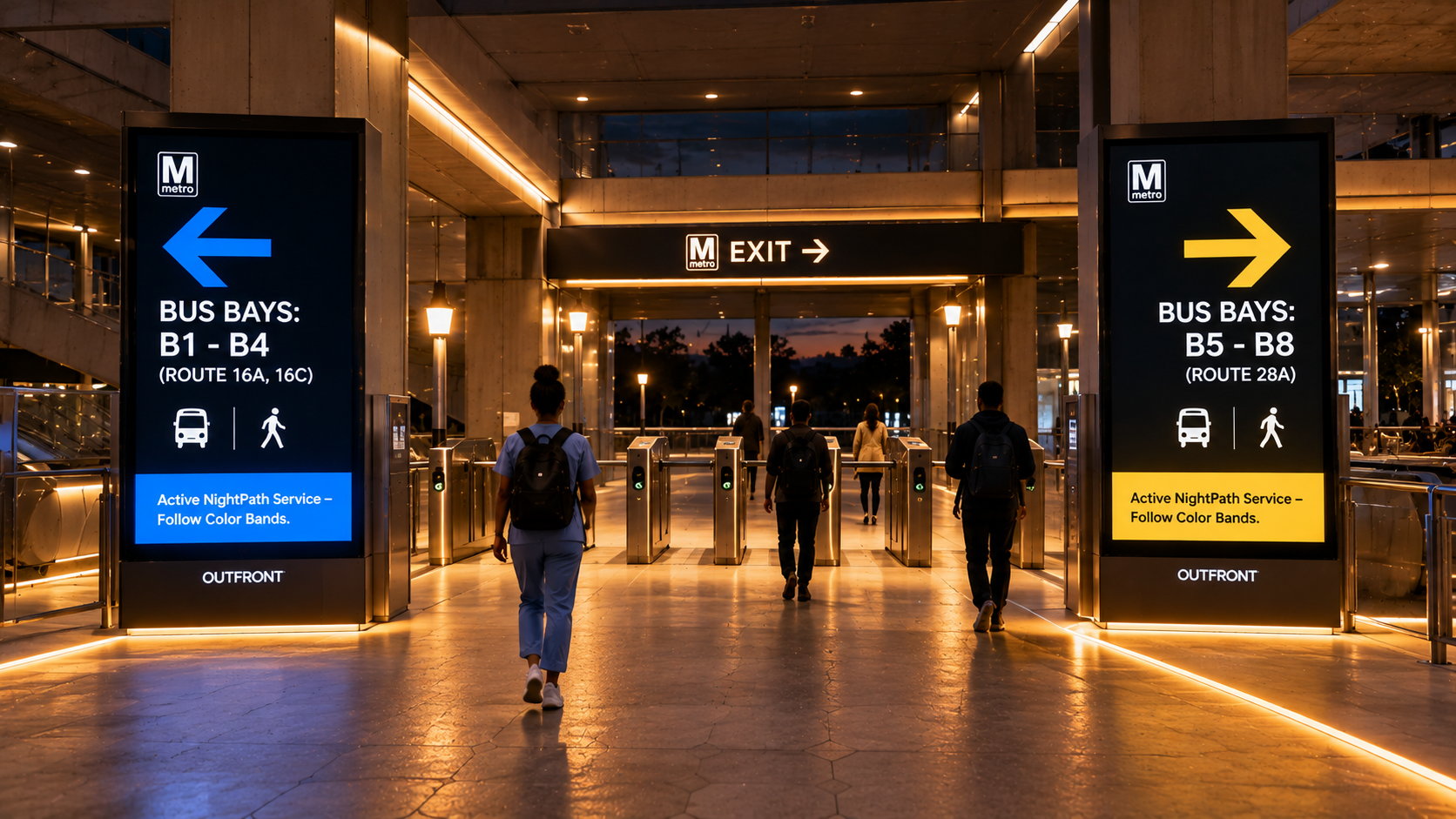
Mezzanine digital screens display directional station exit maps, and the WMATA app launches the mobile web vector compass, headphone audio cues, and smartphone haptic turn guidance.
Touchpoints
Physical
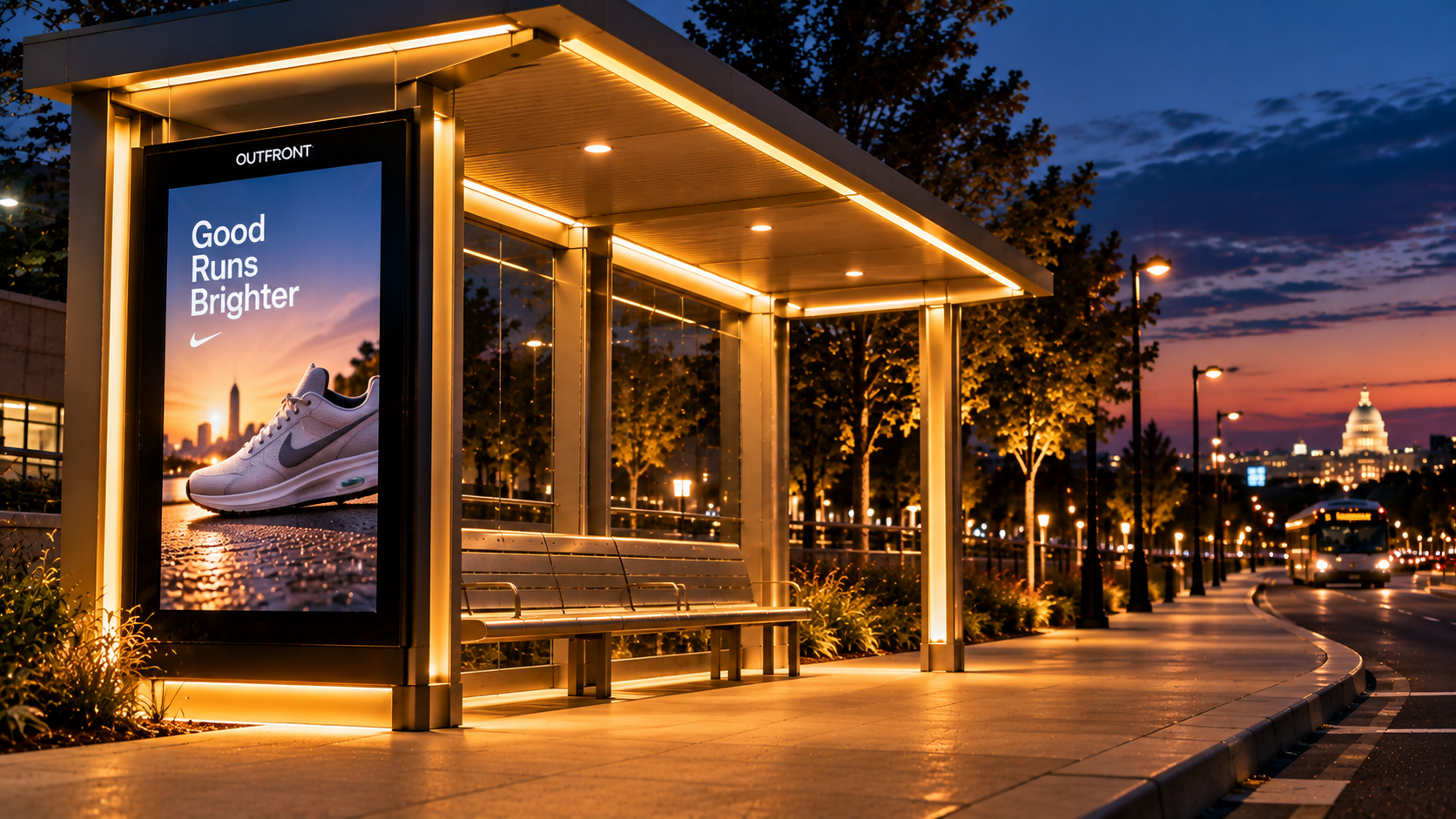
OUTFRONT Smart Frames
Exterior and architectural lights on Metrobus shelters are updated with LED strips managed by OUTFRONT.
Dynamic Warm Shift
Commercial ads keep running while the shelter's frame and ceiling lights shift to a warm, welcoming glow.
Station Mezzanines
Digital screens near exit gates display high-contrast directional color bands pointing toward bus bays.
Digital
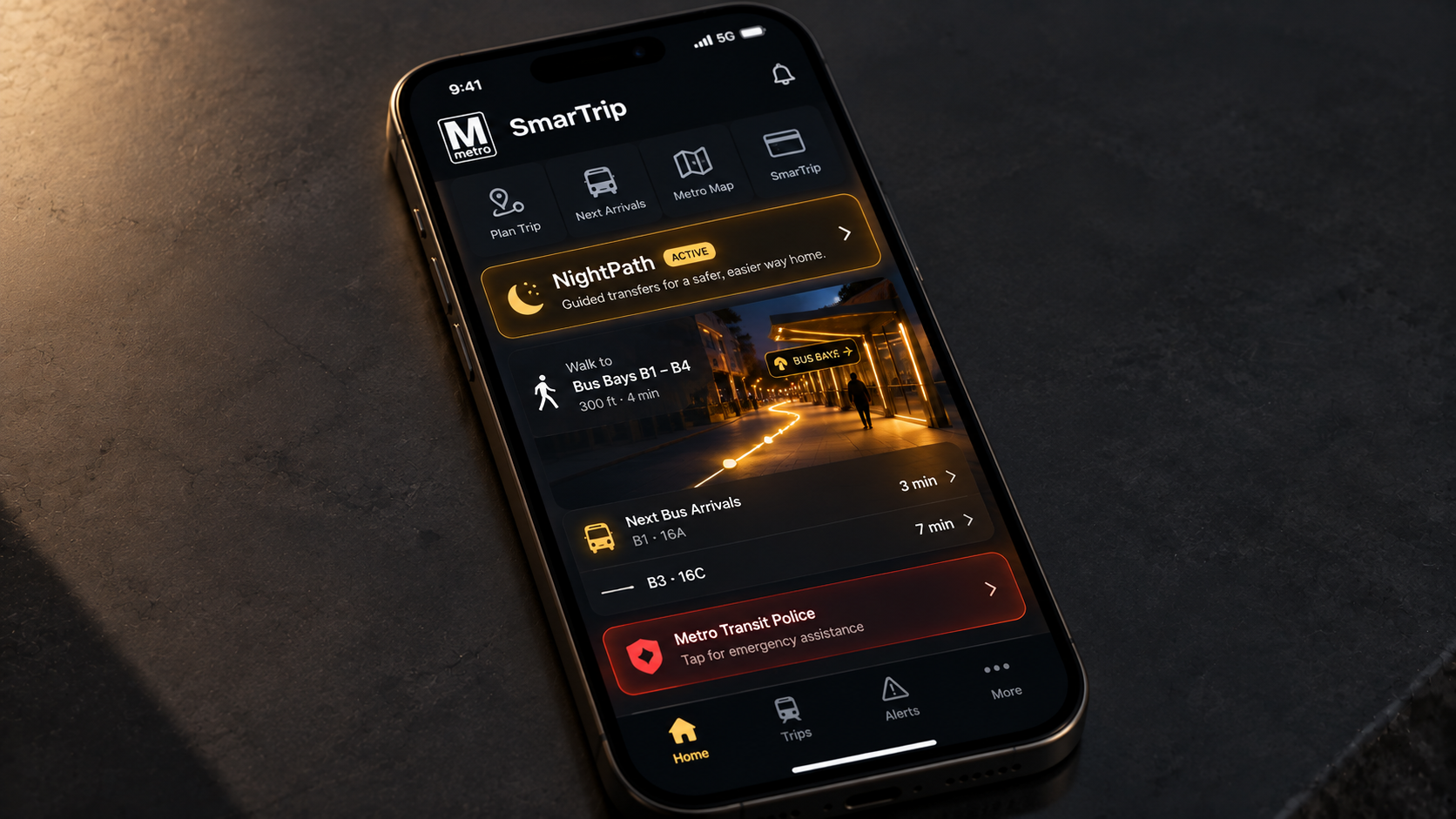
Native Ecosystem
Built directly into the existing WMATA / SmarTrip mobile app, giving daily riders instant access without requiring a new download.
Streamlined Night Mode
Toggles to a high-contrast dark interface showing live bus arrival times and simplified walking directions.
Sensory Guidance & Alerts
Uses standard smartphone vibration (haptic) pulses and audio cues to guide commuters through street turns and confirm safe arrival under the bus shelter.
Emergency Integration
Features a prominent, one-tap direct connection to Metro Transit Police for immediate assistance.
Virtual
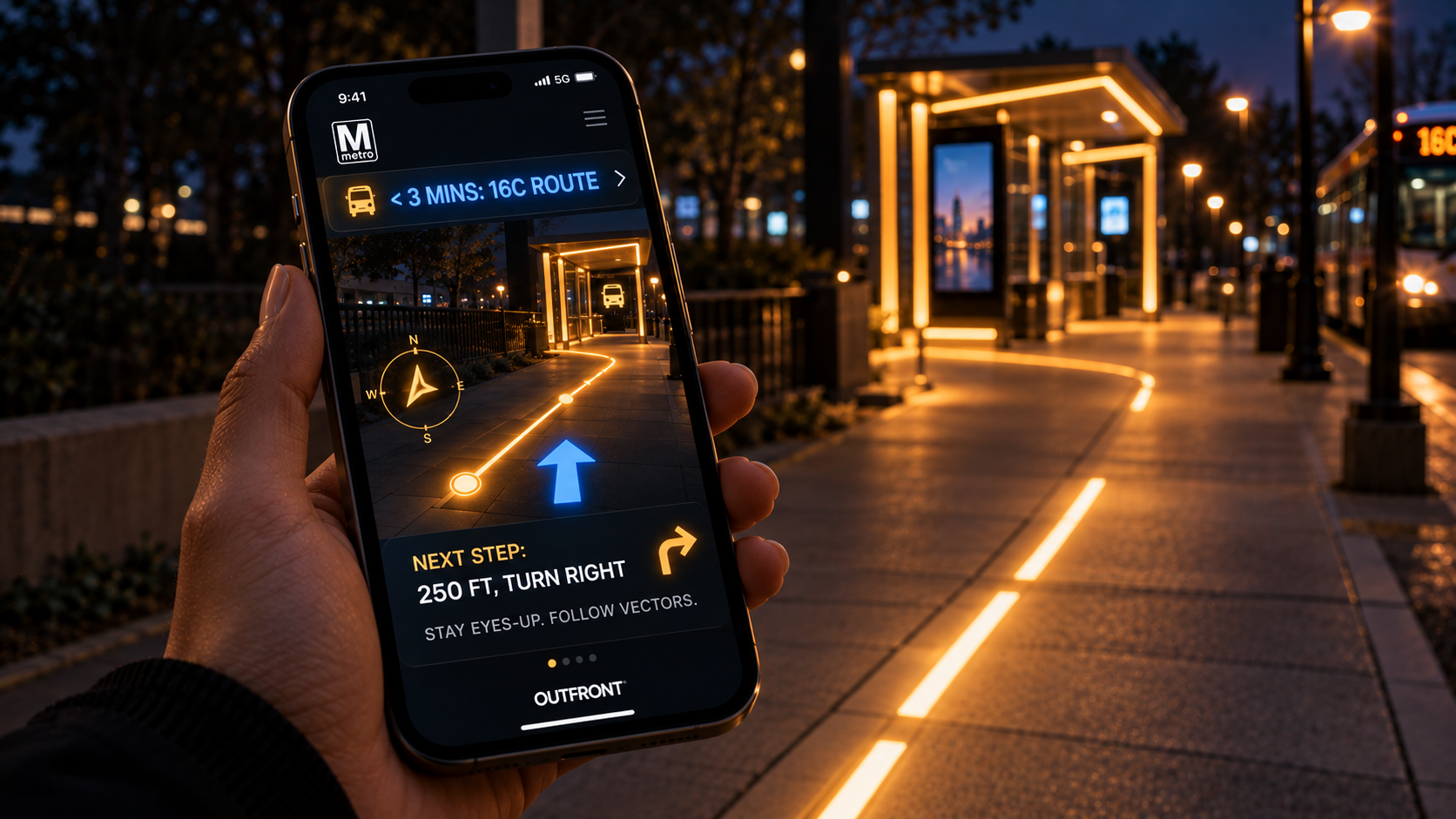
Instant Web Access Scanning a station QR code opens a lightweight mapping view in any mobile browser instantly, no app download required. Eyes-Up Guidance The screen displays a high-contrast glowing vector route and compass heading optimized for low-light visibility. Corridor Alignment The directional interface highlights lighted waypoints along the 300-foot transition walk from the station exit straight to the bus shelter.